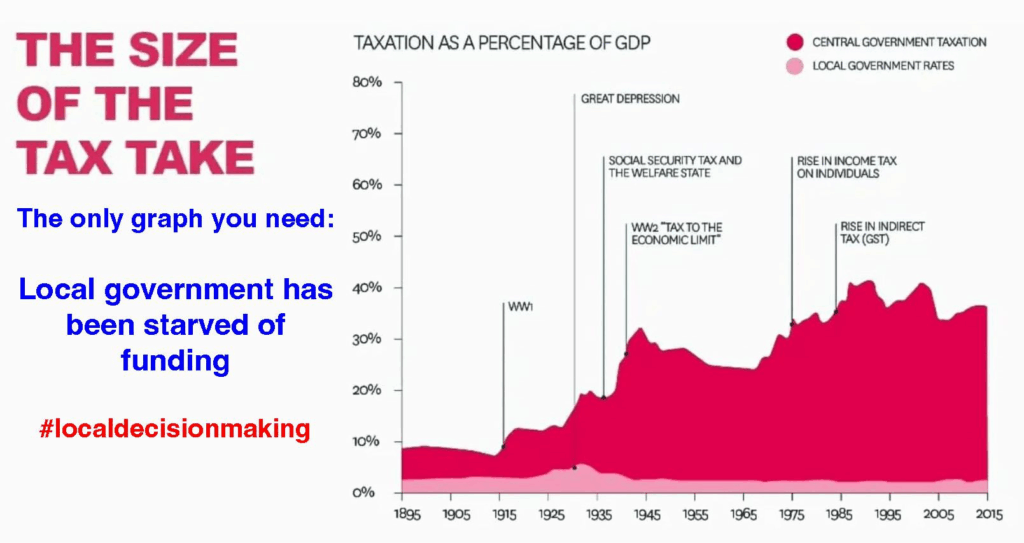
When the government wants to distract the population from what it’s doing badly (like managing roading, or housing etc) it looks around for an easy target to put the boot into. Local government is always high on the list. Rate increases are an easy target. Who doesn’t look at the rates bill and gasp?
In an excellent article in the Press the summary of the very good CCC submission to the government on its proposed rates caps was in this article.
The government proposal of linking rates increases to the CPI is just plain daft.
The article wrote:
The Government’s intention to use inflation, based on the Consumer Price Index (CPI), to set the rates cap, was not “supported by evidence” and was based on “flawed analysis”.The CPI is used to measure average household consumer prices, but the council said this was not relevant to councils and was not causing increases to rates.
“Councils do not purchase a ‘basket of goods’ as the CPI expects. Vegetables, fruit, meat, drinks, cigarettes, alcohol etc are not the focus of council spending.”
The article continues:
Councils undertake activities like construction, laying pipes, repairing roads, building community facilities, maintaining assets, and servicing debt.
If the Government wanted to use inflation as a measure for rates, the council said, it could use a local government inflation index, which took into account price changes for things like land, buildings, roads, bridges, pipes, and machinery.
Research by economic consultancy Infometrics shows between 2021-2023 the CPI increased by 19%, but the cost of building bridges increased by 38%, sewers 30%, roads and water supply 27%.
It was first thought that all water-related rates and charges would be exempt from the cap, but the council has since been told that stormwater would be included, which it opposed.
The council was also concerned about the cost of implementing various new Government policies. It lists water chlorination, the water regulation levy, the cost of upgrading KiwiRail crossings, speed limit changes and implementing housing density rules.
“Unfunded mandates combined with a rates cap are untenable.”
For a minute reflect on how much your insurance bill on your house or vehicle have gone up and consider what sort of increases CCC is facing. This government appears to give little weighting on this.
I met with the current Minister of Local Government before the last election and his lack of understanding of the sector underwhelmed me. He basically didn’t have a clue. Recently I looked up who advises the Minister in the Department of Internal Affairs on local government. The head of the section has been at university and from there onto government departments. He has no working background in local government.
Watch the rates cap debate. I bet a low-rate cap is imposed. The government will go on and on about getting rid of “nice-to-haves”, but I’ve never seen them identify just what is on that list. I’d like to make a few suggestions. First would be that central government pay rates on their properties. That would add $25m to CCC’s income which would take a bit of the burden off the rest of us . The government could also stop charging GST on rates. That would be another saving.

Leave a Reply